|
Solidaritetsutveksling til Malawi
Lær om klimarettferdighet, utviklingssamarbeid og landbruk Er du mellom 18 og 30 år og interessert i miljø, utvikling og landbruk? Er du reiselysten og har lyst på internasjonal erfaring? Spire søker nå to nye deltagere til vårt spennende utvekslingsprogram i Malawi og Norge! |
I Spires solidaritetsutveksling kan du arbeide med ungdomsmedvirkning, miljøutfordringer, utviklingsspørsmål og landbruk sammen med vår søsterorganisasjon Point of Progress i Malawi.
Spire er en miljø- og utviklingsorganisasjon som arbeider for en bærekraftig og rettferdig verden gjennom politisk påvirkning, informasjonsarbeid, demonstrasjoner og debatter. Sammen med vår søsterorganisasjon Point of Progress (PoP) i Malawi har vi utviklet utvekslingsprogrammet Solidarity Exchange for the Environment and Development (SEED). SEED er finansiert av og utviklet i samarbeid med Norec. Den første SEED-utvekslingsrunden startet opp høsten 2022, men Spire har også tidligere arrangert solidaritetsutvekslinger.
Delta i utvekslingsprogrammet SEED (Malawi og Norge)
Spire sender to deltagere til Lilongwe i Malawi for å lære mer om utviklingssamarbeid, ungdomsmedvirkning, landbruk, klimarettferdighet og likestilling. I løpet av utvekslingen bor deltagerne fem måneder i Lilongwe i Malawi sammen med to utvekslingsdeltagere fra PoP, før de fire deltagerne reiser sammen til Norge og arbeider hos Spire i Oslo i fem måneder. Som fulltidsfrivillig vil du gjøre kommunikasjonsarbeid, holde workshops på skoler og for Spires lokallag, reise på gårdsbesøk, lære om og jobbe med politisk påvirkning og jobbe med et eget prosjekt. Det vil også være to lengre reiser under oppholdet i Norge.
Utvekslingsprogrammet 2024/2025 starter i midten av august 2024, og varer til og med 31. mai 2025. Mer informasjon om programmet finner du her.
Alle utgifter i forbindelse med utvekslingen vil bli dekket. Utvekslingsdeltagerne får også månedlig stipend til å dekke mat og andre nødvendigheter under oppholdet, både i Malawi og Norge.
Spire er en miljø- og utviklingsorganisasjon som arbeider for en bærekraftig og rettferdig verden gjennom politisk påvirkning, informasjonsarbeid, demonstrasjoner og debatter. Sammen med vår søsterorganisasjon Point of Progress (PoP) i Malawi har vi utviklet utvekslingsprogrammet Solidarity Exchange for the Environment and Development (SEED). SEED er finansiert av og utviklet i samarbeid med Norec. Den første SEED-utvekslingsrunden startet opp høsten 2022, men Spire har også tidligere arrangert solidaritetsutvekslinger.
Delta i utvekslingsprogrammet SEED (Malawi og Norge)
Spire sender to deltagere til Lilongwe i Malawi for å lære mer om utviklingssamarbeid, ungdomsmedvirkning, landbruk, klimarettferdighet og likestilling. I løpet av utvekslingen bor deltagerne fem måneder i Lilongwe i Malawi sammen med to utvekslingsdeltagere fra PoP, før de fire deltagerne reiser sammen til Norge og arbeider hos Spire i Oslo i fem måneder. Som fulltidsfrivillig vil du gjøre kommunikasjonsarbeid, holde workshops på skoler og for Spires lokallag, reise på gårdsbesøk, lære om og jobbe med politisk påvirkning og jobbe med et eget prosjekt. Det vil også være to lengre reiser under oppholdet i Norge.
Utvekslingsprogrammet 2024/2025 starter i midten av august 2024, og varer til og med 31. mai 2025. Mer informasjon om programmet finner du her.
Alle utgifter i forbindelse med utvekslingen vil bli dekket. Utvekslingsdeltagerne får også månedlig stipend til å dekke mat og andre nødvendigheter under oppholdet, både i Malawi og Norge.
Nysgjerrig på utvekslingen? Her kan du lese om Iselin Gangeskar Paris sin erfaring fra da hun var på Spires solidaritetsutveksling i 2018.
«Gjennom SEED-utvekslingen har jeg ikke bare lært om hvorfor klimarettferdighet må ligge til grunn for alt vi gjør i kampen mot klima- og naturkrisa, men også sett konsekvensene av klimaendringene både for bønder i Malawi og i Norge. Samtidig har jeg blitt kjent med herlige folk og opplevd begge land på helt nye måter», sier tidligere utvekslingsdeltaker Katinka.
«Gjennom SEED-utvekslingen har jeg ikke bare lært om hvorfor klimarettferdighet må ligge til grunn for alt vi gjør i kampen mot klima- og naturkrisa, men også sett konsekvensene av klimaendringene både for bønder i Malawi og i Norge. Samtidig har jeg blitt kjent med herlige folk og opplevd begge land på helt nye måter», sier tidligere utvekslingsdeltaker Katinka.
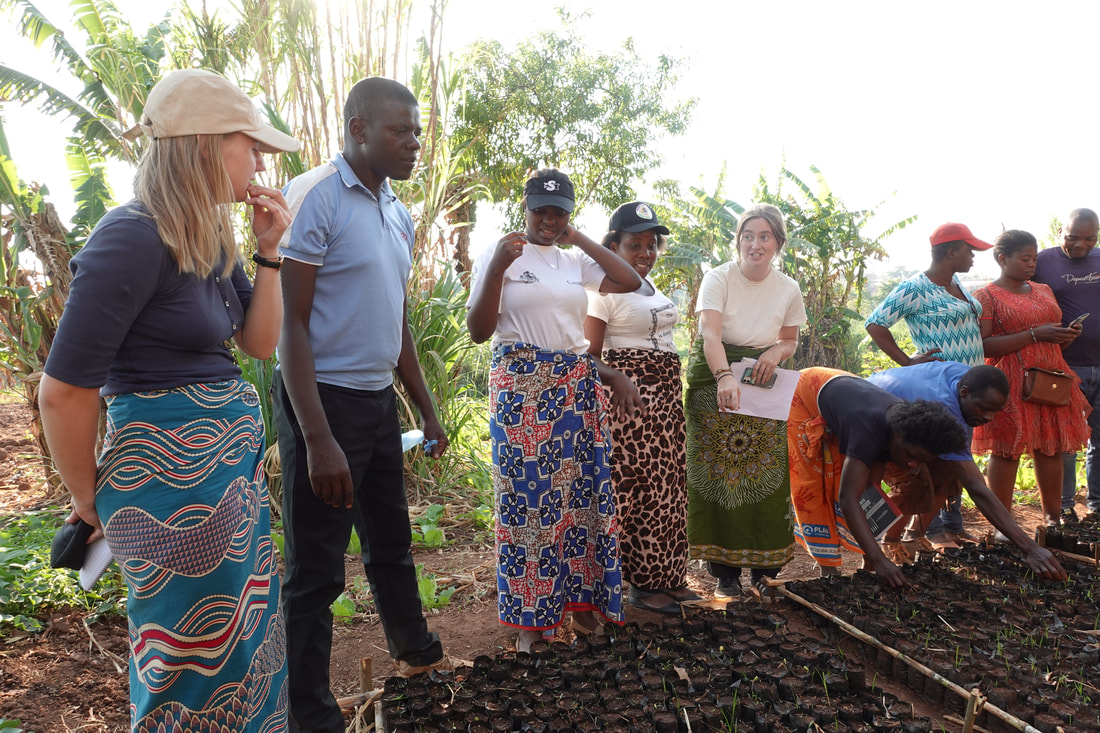
På gårdsbesøk i Malawi. Foto: Spire/PoP.
Hvem kan søke?
Vi søker deg som er selvstendig, tilpasningsdyktig og nysgjerrig. Det er viktig at du har gode samarbeidsevner og god kulturforståelse. Du må ha god formidlingsevne, muntlig og skriftlig, både på norsk og engelsk. Det er en fordel om du har organisasjonserfaring fra Spire eller andre ungdomsorganisasjoner. Det er også en fordel om du har kjennskap til temaer som klimarettferdighet, landbrukspolitikk og utviklingspolitikk. Deltakere må være mellom 18-30 år. Vi oppfordrer alle kjønn til å søke!
Hvilke muligheter får jeg?
Gjennom Spires utveksling får du erfaringer for livet. Du vil lære masse om internasjonalt utviklingssamarbeid og organisasjonsarbeid, samt bli bedre kjent med deg selv og en annen kultur. Utvekslingsopplegget vil gi deg bedre kjennskap til temaene klimarettferdighet, landbruk, miljø, utvikling og likestilling, og vil være en nyttig erfaring for framtidig arbeid innen disse feltene. Du vil også lære mer om hvordan drive politisk påvirkningsarbeid, både i Norge og Malawi.
"Youth exchange has enhanced learning about global issues especially those that affect the youth of today and their future," sier Gift Numeri, leder av PoP.
Vi søker deg som er selvstendig, tilpasningsdyktig og nysgjerrig. Det er viktig at du har gode samarbeidsevner og god kulturforståelse. Du må ha god formidlingsevne, muntlig og skriftlig, både på norsk og engelsk. Det er en fordel om du har organisasjonserfaring fra Spire eller andre ungdomsorganisasjoner. Det er også en fordel om du har kjennskap til temaer som klimarettferdighet, landbrukspolitikk og utviklingspolitikk. Deltakere må være mellom 18-30 år. Vi oppfordrer alle kjønn til å søke!
Hvilke muligheter får jeg?
Gjennom Spires utveksling får du erfaringer for livet. Du vil lære masse om internasjonalt utviklingssamarbeid og organisasjonsarbeid, samt bli bedre kjent med deg selv og en annen kultur. Utvekslingsopplegget vil gi deg bedre kjennskap til temaene klimarettferdighet, landbruk, miljø, utvikling og likestilling, og vil være en nyttig erfaring for framtidig arbeid innen disse feltene. Du vil også lære mer om hvordan drive politisk påvirkningsarbeid, både i Norge og Malawi.
"Youth exchange has enhanced learning about global issues especially those that affect the youth of today and their future," sier Gift Numeri, leder av PoP.
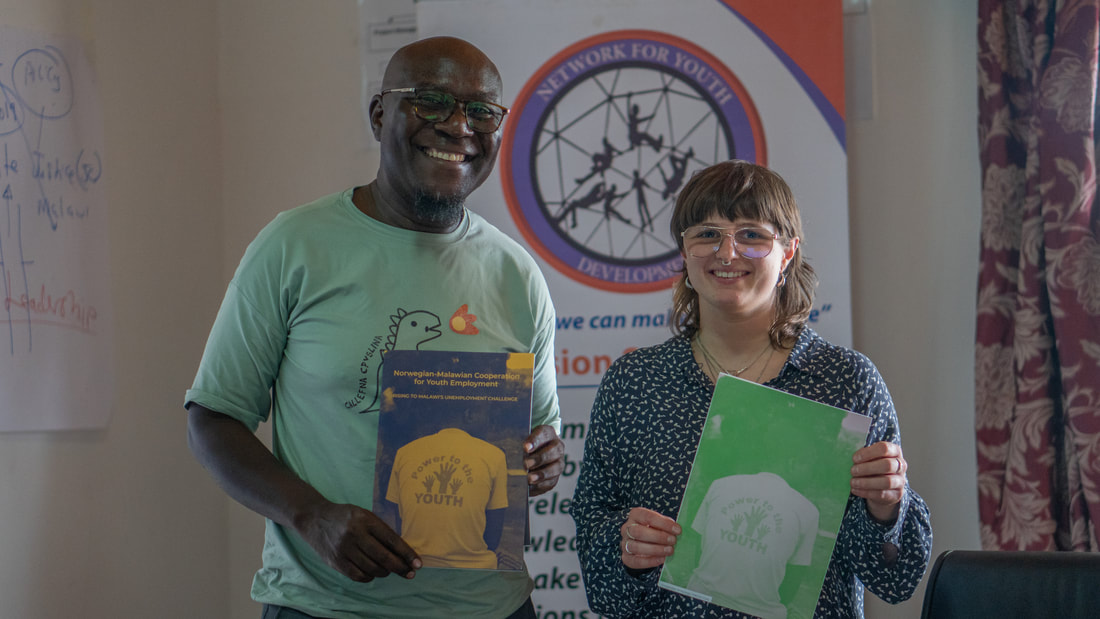
Gift Numeri og Sigrid Elise Høeg på PoP-kontoret i Lilongwe. Foto: PoP (Snoden Meloy Kadzakumanja)
"Verden, og særlig unge, møter store globale utfordringer knyttet til klimaendringer, miljøødeleggelser og økte forskjeller i makt og rikdom. For at vi skal klare å finne gode løsninger må vi lære av hverandre og samarbeide. Gjennom vårt utvekslingsprogram får vi svært nyttig kunnskap, erfaring og motivasjon til å skape en rettferdig og bærekraftig verden. I tillegg er Malawi et svært vakkert og spennende land man virkelig får god kjennskap til gjennom å få jobbe med vår flotte partnerorganisasjon," sier Elise Åsnes, leder i Spire.
Hva gjør du på utvekslingen?
Du vil få en variert hverdag i løpet av solidaritetsutvekslingen. I Malawi skal du besøke PoPs prosjekter og bli bedre kjent med internasjonalt utviklingssamarbeid. Du vil også få mulighet til å besøke gårder og lære mer om landbrukspolitikken i Malawi. I løpet av utvekslingen skal du gjennomføre et selvvalgt prosjekt, f.eks. en rapport eller film, som går dypere inn i ett av hovedtemaene for samarbeidet med PoP: Klimarettferdighet og landbruk i forhold til unges medvirkning og likestilling.
Tidligere utvekslingsdeltagere skrev en rapport om arbeidsledighet blant unge i Malawi, og en brosjyre om malawiske bønders perspektiver på klimaurettferdighet. Gjennom spørreundersøkelser og dybdeintervjuer undersøkte de både bakenforliggende årsaker til, og konsekvenser av, den høye arbeidsledigheten blant unge i Malawi. De utviklet også politiske anbefalinger til malawiske og norske myndigheter.
Ellers vil utvekslingsdeltagerne være med Spire og PoP i det daglige arbeidet, og dele erfaringer fra utvekslingen. Det påfølgende semesteret (høsten 2025) forventes det at du gjør oppfølgingsarbeid gjennom å være aktiv i et av Spires politiske utvalg eller lokallag.
Du vil få en variert hverdag i løpet av solidaritetsutvekslingen. I Malawi skal du besøke PoPs prosjekter og bli bedre kjent med internasjonalt utviklingssamarbeid. Du vil også få mulighet til å besøke gårder og lære mer om landbrukspolitikken i Malawi. I løpet av utvekslingen skal du gjennomføre et selvvalgt prosjekt, f.eks. en rapport eller film, som går dypere inn i ett av hovedtemaene for samarbeidet med PoP: Klimarettferdighet og landbruk i forhold til unges medvirkning og likestilling.
Tidligere utvekslingsdeltagere skrev en rapport om arbeidsledighet blant unge i Malawi, og en brosjyre om malawiske bønders perspektiver på klimaurettferdighet. Gjennom spørreundersøkelser og dybdeintervjuer undersøkte de både bakenforliggende årsaker til, og konsekvenser av, den høye arbeidsledigheten blant unge i Malawi. De utviklet også politiske anbefalinger til malawiske og norske myndigheter.
Ellers vil utvekslingsdeltagerne være med Spire og PoP i det daglige arbeidet, og dele erfaringer fra utvekslingen. Det påfølgende semesteret (høsten 2025) forventes det at du gjør oppfølgingsarbeid gjennom å være aktiv i et av Spires politiske utvalg eller lokallag.
Er du Spires neste utvekslingsdeltager?
Søk før fristen 15. april 2024 gjennom å fylle ut dette skjemaet. Aktuelle søkere blir kontaktet i slutten av april 2024 for intervjuer og får endelig beskjed om deltakelse i starten av mai.
Ta kontakt med organisasjonsrådgiver Mari Kirsti Kaaen hvis du har spørsmål om utvekslingen.
Søk før fristen 15. april 2024 gjennom å fylle ut dette skjemaet. Aktuelle søkere blir kontaktet i slutten av april 2024 for intervjuer og får endelig beskjed om deltakelse i starten av mai.
Ta kontakt med organisasjonsrådgiver Mari Kirsti Kaaen hvis du har spørsmål om utvekslingen.